
Last Updated on November 18, 2026
Under-eye hollows are one of the most common changes women notice in their forties. The skin thins, the cheek loses a little volume and a shadow appears where the lower eyelid meets the cheek. No eye cream will refill a hollow, but there is a lot you can do, from the bathroom cabinet to the clinic.
Here are eight options, roughly from easiest to most involved.
1. Rule out puffiness first
Hollows and puffiness are different problems. If your under-eyes look worse after a late night or a salty meal, fluid retention may be playing a part. More sleep, less salt in the evening and a slightly raised pillow can all help with that side of things.
2. Cool and depuff in the morning
A cold compress or chilled eye gel pads can tighten the look of the area for a few hours. Eye products with caffeine are popular for the same reason. The effect is temporary, but it can take the edge off on a tired morning.
3. Add a retinoid eye cream
Retinoids can improve skin quality over months, and thicker, smoother skin casts less shadow. Choose a formula made for the eye area, start slowly (two or three nights a week) and stop if you get irritation.
4. Protect the skin you have
The under-eye skin is some of the thinnest on the body, and sun exposure speeds up its thinning. Daily SPF around the eyes and a good pair of sunglasses are the least glamorous items on this list and among the most useful.
5. Colour-correct before concealing
Hollows often look bluish or grey. A peach or orange corrector under your concealer cancels that tone, so you need less concealer on top. Pat it in rather than rubbing, and set lightly so it does not settle into lines.
6. Treat allergies
Hay fever and other allergies can darken and puff the under-eye area, sometimes called “allergic shiners”. If your shadows come and go with the seasons, ask a pharmacist about suitable antihistamines.
7. Consider tear trough filler
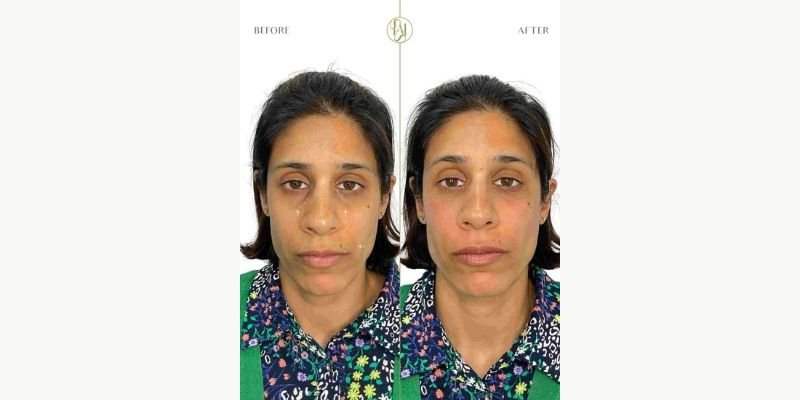
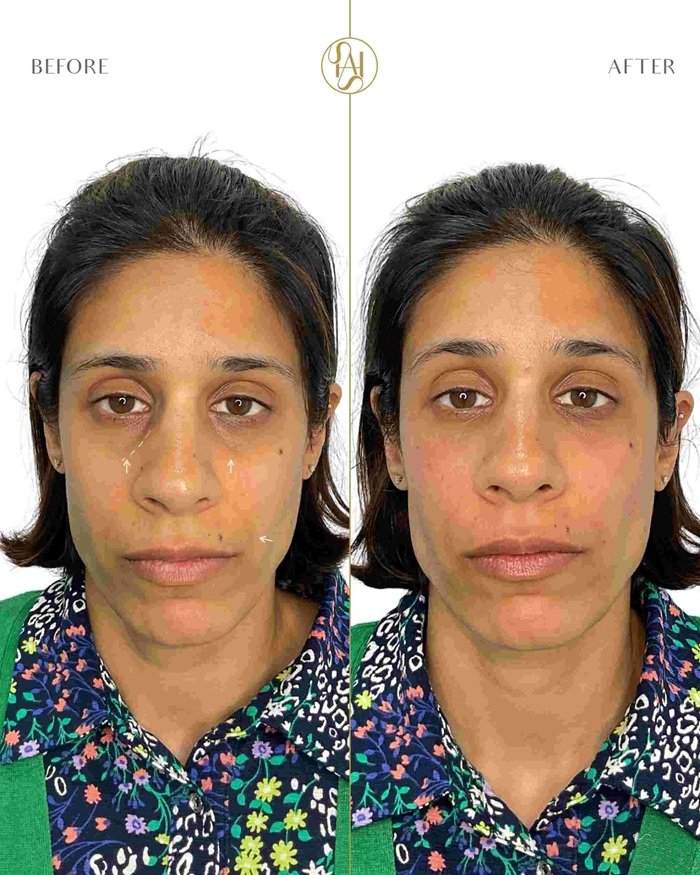
When the hollow is caused by lost volume, the most direct fix is to replace it. Tear trough filler uses a small amount of hyaluronic acid to smooth the groove between eyelid and cheek. At clinics offering tear trough filler in Mayfair, such as the one run by Dr Hasaneen Al Janabi, a GMC-registered doctor and member of the Royal College of Surgeons, the treatment takes about 45 minutes and the clinic says results usually last around 9 to 12 months.
It is not risk-free. Bruising and swelling are common for a few days, and rarer risks include a bluish tint (the Tyndall effect) and blocked blood vessels. The good news is that hyaluronic acid filler can be dissolved with an enzyme called hyaluronidase. Choose a medically qualified injector.
8. Ask about eyelid surgery
If the problem is bulging fat pads or a lot of loose skin rather than a hollow, filler can make things look worse. Lower eyelid surgery (blepharoplasty) deals with the structure directly. It involves more recovery, but for the right person it gives a longer-lasting result.
Which one is right for you?
Start with the simple steps. If the shadow is still there in good light after a good night’s sleep, it is probably structural, and a consultation with a doctor who offers both filler and surgical referral will tell you which category you fall into.